Thursday, July 2, 2020

Picture Books for American History


In a previous post, I told about American History chapter books that I am reading aloud to Gracie over the next few months.  I recently found a blog (Thrive in Grade Five) by a lady who teaches 5th grade in a public school in Oklahoma.  She wrote a blog post that shares books to read aloud to students.  I went to my library's website and put a number of books on hold.  I think I must have found another source of American history picture books because I have more books than what she mentioned; however, I don't remember what the other website was.  (I think I probably searched for the author's names and found other titles that looked good.)

Here are the books that we will be reading over the next few weeks.  Yes, we read a good bit.  I will give a short review of each as we go through them and will update this blog post.


(1773) Colonial Voices: Hear Them Speak by Kay Winters
Both Gracie and I really liked this book!  Gracie loved the illustrations and thought they were well done.  I, too, liked the illustrations and I liked how there was just enough information in the text for someone to learn about life was like for a typical person who had that particular job.  Each two-spread page represents a different person:  an apprentice, a basket trader, a barber/wigmaker, a Son of Liberty, and several others.  I highly recommend this book!

(1739) George Washington's Birthday: A Mostly True Tale by Margaret McNamara and Barry Blitt
This book was just ok.  Some of the information was interesting.  I did like how each page or two-page spread had an informational box that declared if some statements were Fact or Myth.  Neither Gracie nor I were impressed with the illustrations.  Gracie declared this book to be a "never again" book, and although I'm not sorry we read it, I do agree that it was a "once in a lifetime" experience.


(1770-1790) Independent Dames by Laurie Halse Anderson
I read half of this book and said I would read the rest later tonight (we read twice a day), and Gracie said, "No keep," which is her way of saying she didn't care for it.  I really like the premise of the book:  to highlight what women and girls did during the American Revolution did since a lot of emphasis is placed on the men.  I thought it was entertaining and informational.  However, Gracie did not like the illustrations (my apologies to the illustrator).  I may read the rest of the book myself later on.

The Scarlet Stockings Spy (Tales of Young Americans) by [Trinka Hakes Noble, Robert Papp]
(1777) The Scarlett Stockings Spy by Trinka Hakes Nobel
We both liked this book!  The young lady has a clever way of getting information to her brother who is serving George Washington's army.  Gracie liked the illustrations.  The story was touching; I had to have her read the last page because I knew I wouldn't be able to do it without crying.
*Also on Kindle Unlimited


(18th century) John, Paul, George, & Ben by Lane Smith
This was a cute and funny book about John Hancock, Paul Revere, George Washington, Ben Franklin, and Thomas Jefferson.  It tells a brief story about when each was a kid and how it related to something they did as adults.  In the back was a listing of facts and myths.


This was a very simple book.  Gracie didn't really like the illustrations.


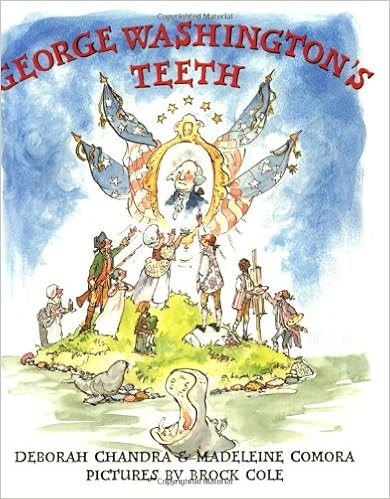
(1770s) George Washington's Teeth by Deborah Chandra and Madeleine Comora
This was a silly story about how George Washington lost all of his teeth.  We didn't really care for it.
(Late 1880s) Cheyenne Again by Eve Bunting
This is a book I liked because it was sad.  It gives a look at how homesick an Indian boy was after being forced to go to school and give up his native culture.


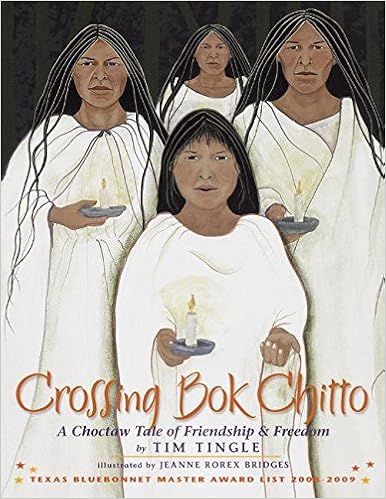
We both liked the story although Gracie thought some of the pictures were a little creepy.  It's a good story of friendship between an Indian girl and an enslaved boy.


Abe's Honest Words: The Life of Abraham Lincoln (A Big Words Book (5))
We liked this book and the illustrations.


The Last Brother: A Civil War Tale (Tales of Young Americans) by [Trinka Hakes Noble, Robert Papp]
(1861-1865) The Last Brother:  A Civil War Tale by Trinka Hakes Noble
*Also on Kindle Unlimited

I liked this book about a young, eleven-year-old boy who joined the Union army as a bugler along with his older brother Davy after their two oldest brothers had been killed in the war.  He forms a brief, otherwise-unlikely friendship with a young boy from the Rebel army.  With a flash of inspiration, he saved lives during the Battle of Gettysburg.

(1800s) Dandelions by Eve Bunting
This was a very good book about a family who left their home in Illinois to make a new life in Nebraska.  The mother is homesick and concerned about loneliness.  The older daughter finds a way to bring comfort and hope to her.

(late 1800s-early 1900s) To Dare Mighty Things:  The Life of Theodore Roosevelt by Doreen Rappaport
We enjoyed this brief overview of Teddy Roosevelt's life.  I admire his tenacity and desire to do right in spite of opposition.


This was a cute story and very suitable for today's time since it is set in 1918 during the influenza pandemic.  I admire stories about children who rise up and take charge to do what is needful.


(1920s) Elizabeth Started All the Trouble by Doreen Rappaport
This book was ok.  Gracie didn't care for the illustrations.  The story was very informative about important women in America's history.  I knew it would be a bit more liberal than what we personally believe, but it wasn't over-the-top and I think I explained some things to Gracie.


(1943) Diana's White House Garden by Elias Carbone
This was a cute book.  I think Gracie was neutral, but she did like the dog.  I had never heard of Diana, so I enjoyed reading a true story that I was not familiar with.  I liked how she became an inspiration for others during WWII.


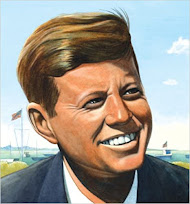
This was a good book.  Gracie thinks that JFK looks like Donald Trump because of his hair.  This book gave a good overview of his life and told us about his successes and failures.  Of course, we adults know him to be an inspirational part of our history.  It mentioned his tragic death, but, thankfully, told it simply and without details.


Pin It!

Friday, June 26, 2020

Masks and the Hearing Impaired


Although I knew it was coming but hoped it wouldn't, I learned a few hours ago that the mayor of Memphis has signed an ordinance requiring all persons (except for those with a written document from a medical professional) to wear masks when outside of their home or car unless they are able to maintain social distancing while performing outdoor activities.

There has been lots of talk about the pros and cons of wearing a mask.  I'm not going to get into that here.  It is pretty much a given that the mandatory decree of wearing facemasks is going to spread over the nation.  Until the coronavirus dies down or until enough people stand up against it, we have to suffer through it.

There is one issue that many people have not considered:  the problems that hearing-impaired people have with communicating with those who are wearing masks.  Hearing-impaired people who rely on reading lips to aid in understanding other people are now not able to so.

My Experience as a Hearing-Impaired Person

My twin sister and I were born three months early in the early 1970s.  My twin sister went to Heaven when we were four days old.  I lived in the hospital for three months before going home.  Although I had developmental delays, not walking until I was 16 months old, my parents did not realize I was hearing impaired until I reached school age.  My mother thought I was "being a Bounds" (her side of the family) by hearing only what I wanted to hear.  (This is not an invalid conclusion.)  I had learned to get along by teaching myself to read lips.  Later when I was in first grade, a teacher at my school (a neighbor of ours who taught my mother when she was little) told my mother that I needed to have my hearing tested.

Mama took me to the speech pathology department at The University of Southern Mississippi to have my hearing tested.  She was shocked (and dismayed that she had not realized it before) that I could not hear normally and needed to wear hearing aids.  I was fitted with one hearing aid for my better ear (My parents could only afford one.) the summer between my first and second-grade years.  I remember the doctor telling me very solemnly that taking care of my hearing aid was to be my responsibility.  I was to keep up with it and make sure it never got wet.  Of course, it rained that day and I remembered covering my ear with my hand.  I'm a rule-follower, in general, so I took his words to heart.  My mother helped me set up a place to keep my hearing aid and its battery when not in use.  I used a ceramic heart-shaped box that had been given to me when I was a flower girl for my cousin's wedding.  [Side note:  I have always taken such good care of my hearing aids that I am still on only my third set.  My first hearing aid lasted 13 years.  My second set lasted 12 years, and my current set is 17 years old.  This is highly unusual, but God has been good in allowing them to last as long as they have.]

My hearing is bad enough that I need to wear hearing aids (though I can get by without wearing them at home - I don't miss much), but not bad enough that I needed to learn sign language or required an interpreter.  I have always been mainstreamed in school, did well in my studies, and went on to earn an education degree at The University of Southern Mississippi.  I taught school for 11-½ years and worked in other jobs requiring dealing with other people.

All that to say, I have gotten along very well by using my hearing aids and my ability to read lips as an aid in helping me to understand others.  And then the coronavirus hit.  My husband put me and my daughter on lockdown.  I called it being grounded because that's what it felt like.  He was the only one who went anywhere for several weeks, going to work and going shopping for what we needed.  We had to watch church via livestream, and I relied on social media and text messaging to keep up with people.  I don't like to talk on the phone - because I'm an introvert and a little bit because it takes a lot of energy to really listen on the phone, but mostly because I hate talking on the phone.  My daughter had more Zoom calls and video chats than I did, and I was fine with that.

My pastor kept our church open for every service but was sure to uphold the group limits, masks, and social distancing.  He and his wife began having a meet-and-greet car line before each service, and that was my sanity saver.  My daughter and I went to church to talk to them (well, mostly my pastor's wife) and then drove home to watch the live-streamed service.  We had our first large-group church service on Easter Sunday when they held the service out in the parking lot.  My husband allowed us to get out of the car and socialize and that was such a blessing.  However, from the beginning of the lockdown, I noticed early on that wearing the masks hindered my ability to understand others especially when there was a lot of background noise.  It took a few weeks before others became more comfortable with removing the masks which helped tremendously.

Help for the Hearing-Impaired

Over the last few days, I have learned of other hearing-impaired people who have suffered much worse than I have.  They have been treated abominably and sometimes no effort is made to help them understand.  I personally have not been treated unkindly, but there are people who flat out will not lower their mask for me to read their lips.  Most of the time, I have my daughter with me and she will help me; if I'm with my friends, they can help me, too.  Still, it's a problem.

Long ago, in an education class, I learned about the then-new ADA (Americans with Disabilities Act of 1990) which stated that businesses and governmental agencies are required to make accommodations so that people with disabilities can enjoy the same level of services as non-disabled persons.  This is why we have wheelchair ramps, handicapped stalls, closed captioning on TVs, etc.  I only had a passing introduction to the law, enough to know that it exists, and have never had a need to study it in-depth.  With all the problems I had read about, I wondered if the masks were conflicting with the law.  (It doesn't - as long as the employees provide some alternate means of communication or do not refuse service because of the disability.)

"What About Those Masks with the See-Through Windows??!!"

If I've heard or read it once, I've heard or read it a dozen times.  Yes, the see-through masks.  From the get-go, I knew it is a bad idea at worst and impractical at best.  Why??  Because I am not going to buy a mask to hand out to every person that I need to talk to.  My husband would have a stroke at the cost.  Also, I don't think they would be too happy if I bought ONE mask and passed it from person to person to use.  Unless many of people in public wear them, it's not practical to offer as a solution.  Plus, I've read that they fog up and thereby become useless for that purpose.

So, Now What?

Now with the ordinance having been signed, everybody (except for the stubborn ones who believe they shouldn't be made to - I don't entirely disagree) will be wearing masks and there is NOTHING in the ordinance to allow for help for the hearing impaired.  That means that many people will not lower their masks -- because of the ordinance, because of fear of losing their job, and because of fear that they'll catch the disease themselves.  What they fail to realize is that if they're in public at all, they're already at risk!  Why?  Because all the people touch all the stuff.  So, we're in a catch-22 situation.

I have made a couple of graphics for hearing-impaired people to use that they can save onto their phones or tablets and show to others.  Feel free to download and use it if you think it will help you.  You can even print it out if you wish.  Just do a right-click and save the image (if you are on your computer).  I put it in two different layouts so that it can fill the screen.


Let me know if this is a help to you or if you have any thoughts regarding the subject.

Also, a few links:


Pin It!

Thursday, June 25, 2020

Read Alouds for American History


Last year, Notgrass History came out with a brand-new American History program called Our Star-Spangled Story.  It is intended to use for grades 1-4.  I quickly ordered it, began it, and then it sat until the Coronavirus hit when I suddenly had more time.  I did continue with some of the recommended read-aloud books even when we were not doing the history lessons.  I really love this program!  Each lesson is beautifully written and has numerous photos of people, places, and things mentioned in each lesson.  It is well worth getting!

Our Star-Spangled Story Curriculum Package

Included in the lessons are suggested books to read aloud to the children (or the children can read to themselves if they are independent readers).  I have really enjoyed doing our read alouds over the last few years.  I think that read alouds are wonderful because not only do children get to learn wonderful stories, they also get to learn great vocabulary and the books can spark some great discussions!

Notgrass History also has supplemental material online including a PDF file of recommended extra reading.  I used that list to come up with a schedule of readings to go through which will give an overview of American History.  I will tell what we've read so far and what else is on our list.  

Books We Have Read Aloud So Far

Benjamin West and His Cat Grimalkin
We had never heard of Benjamin West before.  He lived in pre-Colonial America in Pennsylvania with his Quaker family.  He showed an early talent for art, but was forbidden by his father to practice it.  His Native American friends helped him learn how to make paints from nature -- and he got a little bit of help from his cat as well!  We both enjoyed this story very much!

(1770s - American Revolution) Toliver's Secret by Esther Wood Brady
Young Ellen, who is very shy, becomes a spy for the Patriots after her grandfather is injured.  She encounters many challenges in her journey and grows because of it.  We enjoyed this book as well.  The only caveat I can think of for this book is that she has to dress up like a boy in order to perform her spy duties.

This a short, easy read about a little girl who traveled with her father to their new home in the wilderness.   After her father builds a cabin for his family, he returns to bring back his wife and their other children.  Sarah remains behind with their Native American friends.  This was a good book.  Chronologically, it should've been read first, but it would easily fit in among other books about the 1600s-1800s.  Gracie got a little tired of the recurring sentence, "Keep up your courage, Sarah Noble," but for younger listeners, it would be a good repetitious saying to drive the value home.

(1750s - French & Indian War) 
Indian Captive by Lois Lenski
Again, this book is out of order.  We both enjoyed this book about a little girl whose family was captured by a group of Native Americans and Frenchmen and who later lived with the Seneca Indians.  The main conflict in the story was about whether or not she would be returned to her family and whether or not she should adapt to Indian ways.  Gracie and I had some discussions about how there are good people and bad people in every segment of population and how we should treat others and view them.  My only caveat is that there is a noticeable lack of Christianity in this book, only brief mentions of the catechism.  Gracie is old enough to know what is true and what isn't true and didn't take any of the Indian religion as truth.  She even laughed at them for revering what she called their "corn god."  Don't be offended - she's 10 and she had never learned much about the Indians and their beliefs before.  Again, it offered the opportunity for some good discussion.

This is the book that we just finished last night.  I even read the final two chapters in one sitting so that we could find out what happened to little Sarah.  This is a short, beautifully-written book about a little girl who wanders off into the woods and is taken care of by a bear!  It is based on a true story about a pioneer family who lives in the mountains of New Hampshire.  One of the things I liked best about the book is the great trust in God that Sarah's father had.  He had great faith that she would be found safe and sound.  One thing that amazed me is the great responsibility given to the children in the book.  The boys (ages 11, 10, and 8) were given charge over the farm chores; the youngest one was to look after his younger siblings, especially young Sarah (who was 3 or 4).  The 5-year-old sister was to take care of the house and the youngest sibling, an infant not even crawling age!  I definitely used this to relate how even young children can and should be given responsibilities and should take care of those responsibilities well.  I bought this book at a used book sale a year ago even though it was taped together.  By the time we finished it, it was falling apart.  I like it so well that I have ordered a brand-new replacement copy.
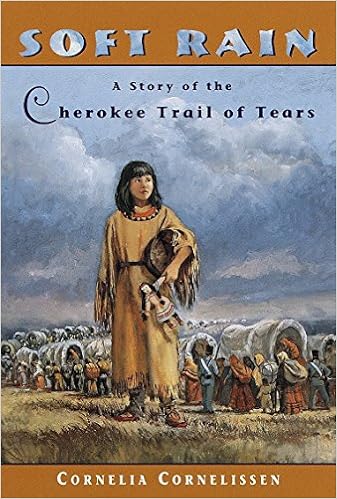

(1838) Soft Rain: A Story of the Cherokee Trail of Tears by Cornelia Cornelissen
This came highly-recommended by an internet friend of mine, Challice, who has a blog at Sodbuster Living, so I was excited to read it.  It tells the story of a 9-year-old Cherokee girl who was forced to move from her home to the West.  I don't want to give too much away, but it tells about the hardships without distressing details to young readers/listeners.  Most of the things that worried me as I read it were resolved happily at the end.  I did cry at the very end (not quite an ugly cry, but almost) because, even though the details were fiction, the essence of the story was nonfiction, and I could see the hand of God in this book.  My only caveat is for mothers who have lost children and have moved away from the area where they passed away.  It will probably hurt your heart more so than the average reader. (I have a dear friend to whom I normally loan my favorite read-aloud books, but I won't be loaning this one to her for that reason.)


(mid-1800s)
Freedom Crossing by Margaret Goff Clark
I have a terrible habit of forgetting character's names almost as soon as I've finished reading the book.  This book is a fine example of seeing a character (the girl) change her views throughout the story.  Gracie and I both enjoyed this book.  She often asked me to read one more chapter.  There was nothing too graphic (only a brief mention of scars on the back of the boy) or otherwise too heavy for young ears.  It was a well-balanced book in all respects.  Although the character of Walt, a slave catcher, was a little caricaturish and predictable.


(pre-1860)
Thee, Hannah by Marguerite deAngeli
Hannah is the youngest girl in a Quaker family.  She is a bit hot-tempered and is fascinated by ladies fashions.  In the story she is tempted by "Old Spotty" and finally learns, through an unselfish act of great charity, the meaning of the Quaker life and values.  We both enjoyed this book and declared it a keeper!


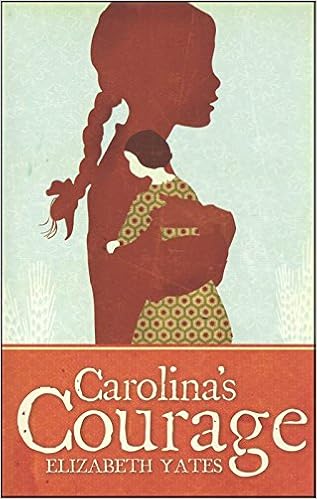
(mid-1800s) Carolina's Courage by Elizabeth Yates
Gracie asked if there was a sequel to this book, which let me know she really enjoyed it.  I was a little afraid she would think it was too simple or not very exciting, but, apparently, I was wrong.  I do love the recurring theme of Courage that appears in many of these read-aloud books.  I think while we've been in 2020 and its upheaval, it's a good reminder and encouragement to remain brave.  Without giving any spoilers, I loved the role that the doll played in the book.


(1866-1867) Farmer Boy by Laura Ingalls Wilder
We read this a couple of years ago when I read the entire Little House series aloud to Gracie.  This was a favorite book for both of us.  I think I appreciated this book even more while reading it because I actually noticed foreshadowing in the book and because of the great love and respect held in the Wilder family.  Gracie enjoyed it so much that she wanted me to skip ahead to These Happy Golden Years so that she could find out more about Almanzo!  I won't be re-reading this book, but it is one of the books recommended to read in conjunction with Our Star-Spangled Story.  I highly recommend all of the Little House books!!

(mid-1800s) By the Great Horn Spoon by Sid Fleischman
We are in the middle of this book and it's definitely a keeper.  This book features a boy as one of the main characters which gives it a different flavor.  It is exciting and funny.  It's also educational for learning about life on a ship and how climates change while traveling through different latitudes.  Updated:  Still a keeper book!  The only thing I didn't like about our copy of the book is the illustration of two bare-chested men bare-knuckle fist fighting each other. 

(late 1800s)  Old Yeller by Fred Gipson
We are very close to finishing this book.  It is a coming-of-age story about a 14-year-old boy, Travis, who has to take care of his mother, little brother, and his home while his father is away on a cattle drive.  He acquires a dog, which he didn't want but grew to love.  I watched the Disney movie as a child, not much younger than Gracie, and I remember the ending more than the story.  We are really enjoying this book.  It has a lot of foreshadowing in it.  I'm afraid Gracie is going to have a meltdown when she realizes what happens to Old Yeller; we'll see.  We are planning on renting the movie on Amazon Prime tomorrow night.   Update:  Gracie didn't cry; but I did (not at the dog, but at the parents).  We both enjoyed the movie even though the ending was slightly different from the book.


(late 19th century)
Sarah, Plain and Tall by Patricia MacLachlan
I saw the Hallmark Hall of Fame movie based on this book years ago and loved it!  I later read the book and loved it, too.  There are at least four sequels which I will read interspersed among our future books.  They are small (60-90 pages or so) and will be quick reads.  I was happy that Gracie enjoyed this book.  It's a very sweet, gentle book that shows and evokes emotion through few, but well-stated words and dialogue. We have now read all five books in the series (Gracie calls them the Caleb books), and we really enjoyed them all.  The last one is probably my favorite, which surprised me because I have always loved the original Sarah, Plain and Tall. I am going to begin showing Gracie the DVDs of the movies which I bought off of Ebay, most likely this weekend. 
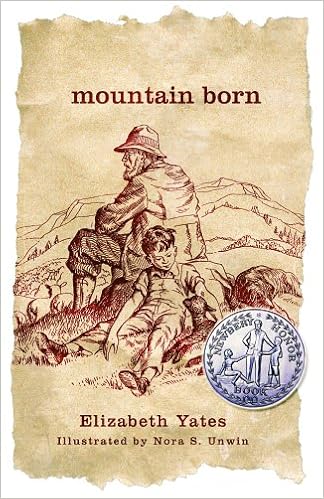
(?early 20th century?) Mountain Born by Elizabeth Yates
It is a little hard to gauge exactly when this book is set - which is not a bad thing because it highlights the timelessness of the story.  Given that the school year runs from post-harvest to pre-shearing, it easily could be set anywhere in the late 1800's to the early 20th century.  This is another sweet, gentle book that does not shy away from life lessons that children must learn.  There is some mention of the Bible in the book which adds to the value, but parents can easily draw biblical lessons from other portions of the book.  This is a Newberry Honor Book and is well-deserving of that honor.


I decided to insert this book into our read-aloud series since Thanksgiving is our next holiday.  I have heard that this is a great book.  We really enjoyed this book!  It gave, as far as I know, an accurate portrayal of his life without heavy topics for children to learn about.  A friend of mine who taught a homeschool lesson to our co-op children likened Squanto to Joseph in the Bible by relating how both of them went through many trials only to have God use them to help save the lives of many other people.  That made us appreciate this story even more.

Books We Will Be Reading in the Future
As we finish reading each of the following books, I will do a brief book review and move it to the section above.

(early 1900s) Betsy-Tacy by Maud Hart Lovelace
Back in the mid-1990s when the internet was new and just beginning to take off, I joined an email group that talked about children's books.  I had long been an avid reader of children's books but found out about a new-to-me series called the Betsy-Tacy series which is set in the early 1900s. There are some fans who are every bit as fanatical about Maud Hart Lovelace as I am about Laura Ingalls Wilder!!  Anyway, I read the entire series and enjoyed it very much.  I will be reading Gracie the first four which covers Betsy, Tacy, and Tib's childhoods.  There are several others that cover their high school years (and beyond, if I remember correctly).  So far Gracie is enjoying this series.
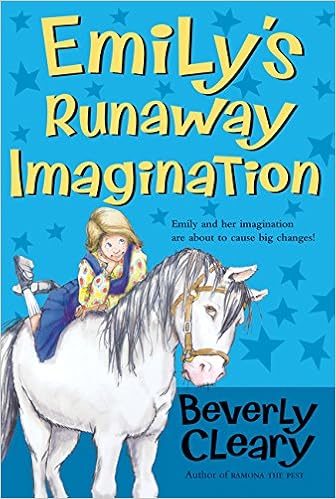


(c. 1920) Emily's Runaway Imagination by Beverly Cleary
I had never heard of this book before seeing it listed in a recommended book list.


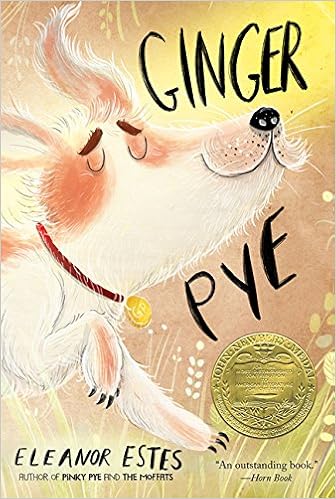
(mid-20th century) Ginger Pye by Eleanor Estes
Sequel:  Pinky Pye
I had never heard of this book before seeing it listed in a recommended book list.


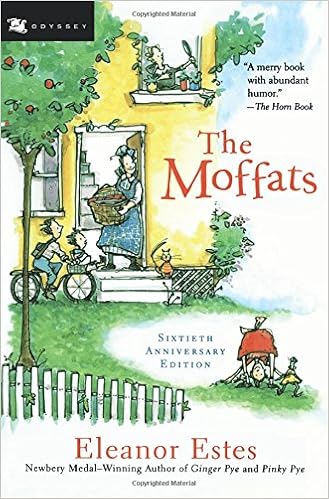
(mid-20th century) The Moffats by Eleanor Estes
I'm pretty sure I read at least a couple of the books in this series when I was in 5th grade and enjoyed them.


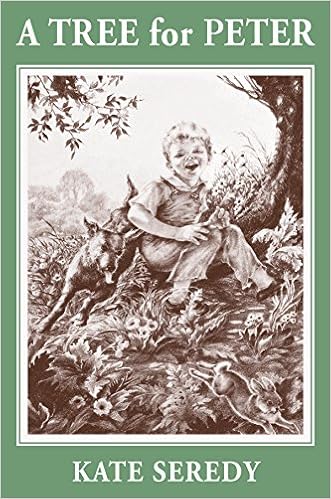
(mid-20th century) A Tree for Peter by Kate Seredy
I had never heard of this book before seeing it listed in a recommended book list.


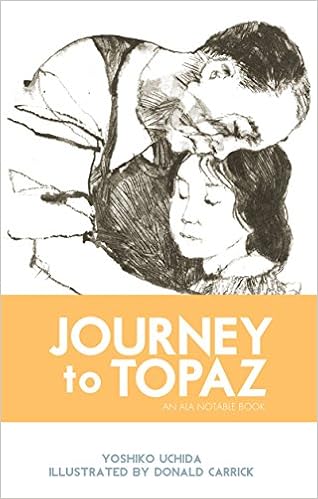
(1940s - WWII) Journey to Topaz by Yoshiko Uchida
I had never heard of this book before seeing it listed in a recommended book list.


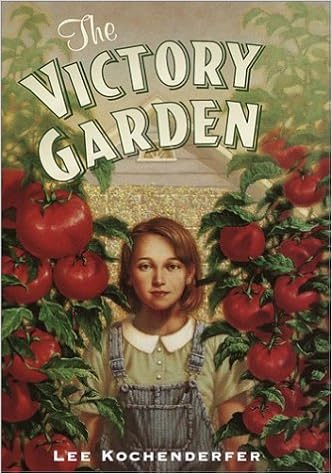
(1943 - WWII) The Victory Garden by Lee Kochenderfer
I had never heard of this book before seeing it listed in a recommended book list.


(mid-20th century) The Year of Mrs. Agnes by Kirkpatrick Hill
I had never heard of this book before seeing it listed in a recommended book list.


The Hundred Dresses by [Eleanor Estes, Louis Slobodkin]
(mid-20th century) The Hundred Dresses by Eleanor Estes
I know I've read this one before and enjoyed it.


(1955) Flood Friday by Lois Lenski
*Available on Kindle Unlimited
I had never heard of this book before seeing it listed in a recommended book list.  However, I've read others by Lois Lenski that I enjoyed.


(1960)
Through My Eyes by Ruby Bridges
I had never heard of this book before seeing it listed in a recommended book list.  I look forward to reading this as I admire that little girl's courage!


(late 20th century) Katy by Mary Evelyn Notgrass
This was written by the daughter of Ray and Charlene Notgrass who have authored excellent history curriculum for grades 1-12.


(2002)
14 Cows for America by Carmen Agra Deedy
I had never heard of this book before seeing it listed in a recommended book list.


Do you have any other good books to share?
Pin It!

Tuesday, June 23, 2020

God's Smuggler: A Warning for Parents


God's Smuggler
To skip my long story and read the warning, scroll down for the header.


Every year, one of my favorite things to do is to go to used book sales for homeschoolers.  Unfortunately, because of Covid-19, the biggest one of the year, sponsored by our local homeschool association (MHEA),  had to be canceled.  However, another favorite book sale which was begun by a mom five years ago was held today.  This one is great because it is held at a local park, there is no entry fee, and I always see people I know!

Somehow I slept through my alarm and woke up at 8:22 -- just  23 minutes before I'd planned to leave to go to the book sale.  It took several tries to get my daughter up, in between getting dressed, chugging down a protein drink, switching my wallet to my Kavu backpack, and locating a couple of bottled waters to take.  I learned my lesson last year, almost passing out from the extreme heat.  #BecauseMemphis 

We managed to get out the door, to the bank for a quick cash withdrawal, and to the park where about half of the sellers were already set up.  The moms (I never see dads -- probably because they're at work earning the money for us so we can buy All the Stuff) were opening up their car trunks and setting up tables full of all kinds of homeschool material.

My daughter enjoys this sale, too, because she can run around with her friends, make new friends, and, after I'm done, go to the playground to play.  I usually give her a little bit of money (if she doesn't have her own) so she can buy something that she is interested in (and to keep her out of my hair because I have a list and I need to think!).  We both saw several friends whom we had not seen in over 3 months which was great.  Unfortunately, the playground is closed because of Covid-19 restrictions, but Gracie still had a good time.

I mostly bought books for our read alouds and for Gracie to read independently.  I had hoped to find some of the curricula that I know I'll be using for 5th grade, but I was out of luck this time.

One lady has a good side business of selling books both online and at these sales.  She's awesome because she puts the books in plastic bins in alphabetical order and can look up her inventory on her phone.  I bought a good chunk of my reading list plus a few others I was interested in from her.  I could have bought more, but after perusing book lists and recognizing many book covers, I couldn't remember what I had and what I didn't.

While at the wonderful book tables, a friend of mine was also looking through the books to grab the ones she needs for her four girls.  She is switching to Sonlight for at least one of her daughters.  (I have never tried Sonlight, but I love that it is literature-based!)

While I was picking through and being nosey, I noticed that my friend had picked out the book God's Smuggler by Brother Andrew.  I read this book a long time ago when I was a teacher at my church's Christian school back in the early 2000s.  At the time, it was part of ACE's literature curriculum.  Their accompanying literature guide (composed of questions to answer) was not very well developed.  I preread all of the books before the students read them (it helps that I love to read) and typed up the questions divided by chapter just to make it a little easier for them.  When I read God's Smuggler, I was shocked at some of the content.  I don't remember what grade it was assigned to, perhaps 6th or 7th?  At any rate, the snippets that bothered me, I felt like were too mature for that age group.  And, honestly, some of it, I would've thought was too mature and wicked for even a high school student. (That's my opinion, take it or leave it.)

I told my friend, "You might want to preview that book.  It has some things that I personally would not want Gracie to know about until she's much older."  She said ok.  I didn't want to be interfering, but I did want her to be forewarned.

When I got home, I loaded my Kindle version of the book, found the highlights I had made several years ago (when I had told another friend about it), took a screenshot, and emailed it to the friend I saw at the book sale.  I wanted to save her the time of reading and finding what I'd been concerned about.  She emailed me back and thanked me for showing it to her.  I thought that other parents might also want to know about this.

God's Smuggler: A Warning for Parents

Troublesome snippets from the book 

1.  (Language)  From Chapter 2: The Yellow Straw Hat
"But I was going off to take back our colonies for the Queen, and perhaps gets a few of those dirty revolutionaries who everyone said were Communists and b*st*rds.  The two words automatically went together."

2.  (Sexual innuendo)  From Chapter 2:  The Yellow Straw Hat
"When I woke up from these org**s, I would wonder why I was doing these things..."

3.  (Homosexuality/Bestiality)  From Chapter 5: The Step of Yes
"The leader of the foul wisecracking, I discovered, was a girl named Greetje.  Her favorite subject was s*d*my: she speculated aloud on which animal would find a soul mate in me."

4.  (Sexual innuendo)  From Chapter 5:  The Step of Yes
"I can see," Greetje was booming, "how you might not be sure."  She caught sight of me and grinned maliciously.  "All men are alike in the dark, eh, Amy?" she shouted.

5.  (Sexual innuendo)  From Chapter 5:  The Step of Yes
"...let us know that she was coming only to find out what really went on after the lights went off."

Some of these might be rather tame to other parents, but keep in mind that my daughter is only 10.  Also, we are very conservative and limit her exposure to know about wickedness (although some things cannot be avoided).   The third snippet with reference to bestiality was the one that shocked me.  There's no way I would want my young daughter exposed to such a thought that that kind of wickedness exists at all, and I sure wouldn't want to explain what any of that meant at such a young age.

The Rest of the Story

When I was a teacher pre-reading the books, I was so horrified by what I read that I showed it to my pastor.  He, too, didn't approve of it at all.  ACE had just had a change in leadership and a man of whom we knew and had heard preach was serving as ACE's president.  I typed up a letter from my pastor and enclosed photocopies of the pages with the sentences highlighted.  The man wrote back thanking my pastor for bringing it to his attention and promptly removed the book from their literature package and stated that they did not have another book to replace it.

I was curious to find out if they had put the book back in.  I couldn't easily find out from the ACE website, so I went to ChristianBook.com which is very good about providing detailed information on the material that they sell.

I found out several things:
  1. They still use the same Basic Literature Study Guide that they did back in the early 2000s.  This should have been updated LONG ago.  The elementary grades are far better, in my opinion.
  2. It was for 7th grade, too young for mature content, in my opinion.
  3. They still have God's Smuggler included in the Basic Literature Study Guide; however, they do not include the book as part of the package.
  4. They included a disclaimer of sorts saying, "Please Note: The ACE Literature & Creative Writing Grade 7 Resource Book Kit (sold-separately) is required to use this curriculum. This pack does NOT include the book "God's Smuggler" due to a publisher decision."  In my opinion, they should've stated why it's not included or replaced it with something else.  It just feels like a passive acceptance.  Not to mention the need to update it after 16+ years!!
Aside from the opinions I stated (and a few others I didn't because they're irrelevant to this discussion), I have nothing against ACE/School of Tomorrow.  It served us well for the Christian school for which I taught.  As a matter of fact, I plan on using their Bible and Social Studies PACES for my daughter this year.
Pin It!

Saturday, June 13, 2020

Life Hack: Fridge Water and Air Filters

Our fridge has been complaining about needing a new water filter and air filter for several months, and it finally went on strike a few weeks ago, refusing to give us water or ice out of the dispensers.  The nerve!

My husband had to go to Home Depot to get things for another project (installing our new dishwasher which the men could not install because of our copper connections - store policy or some other such thing), so I asked him about getting the filters.  I knew I had recorded the numbers somewhere on my phone -- but was it this phone or my previous phone?  Before I could attempt to find it, my husband showed where I had written the numbers on the back of one of the removable shelves.  "Brilliant!" I said, "I don't even remember doing that!"  He tried to pass it off as HIS handwriting, but we all know better than that.
Pin It!

Friday, June 12, 2020

80+ Alternatives to the Traditional Book Report


Last fall, our Language Arts curriculum had an assignment for a traditional book report.  Gracie hated it.  If it were just for that reason, I probably would not have decided to forego traditional book reports, but, to be honest, I don't see a whole lot of value in them.  We, as adults, do not write book reports.  Even if we do book reviews for Amazon or GoodReads, it is best NOT to do them book report style (Here's a great article telling why and how.).

Yes, I want Gracie to read on purpose, but I want it to be an enjoyable, rich experience, not one burdened down with a dull writing assignment.  Let's be honest, only book nerds like me would even enjoy that kind of thing (at least a little).  Gracie is definitely not a book nerd.  <sigh>

I do like the idea of doing some kind of project to go along with assigned independent reading, so I spent an evening or two scouring the internet for alternatives to traditional book reports.  I was happy to find a wide variety of types of projects -- from video-style to hands-on, both of which Gracie will enjoy.

I am making this document available to you:

Several of the ideas have "See Pinterest" typed by it simply because the description would have been too long.  You can go to my Pinterest Board to view the links.

Do you have any ideas that are not in my list?  Let me know by dropping a comment below.  Happy Reading!
Pin It!

PrintFriendly